
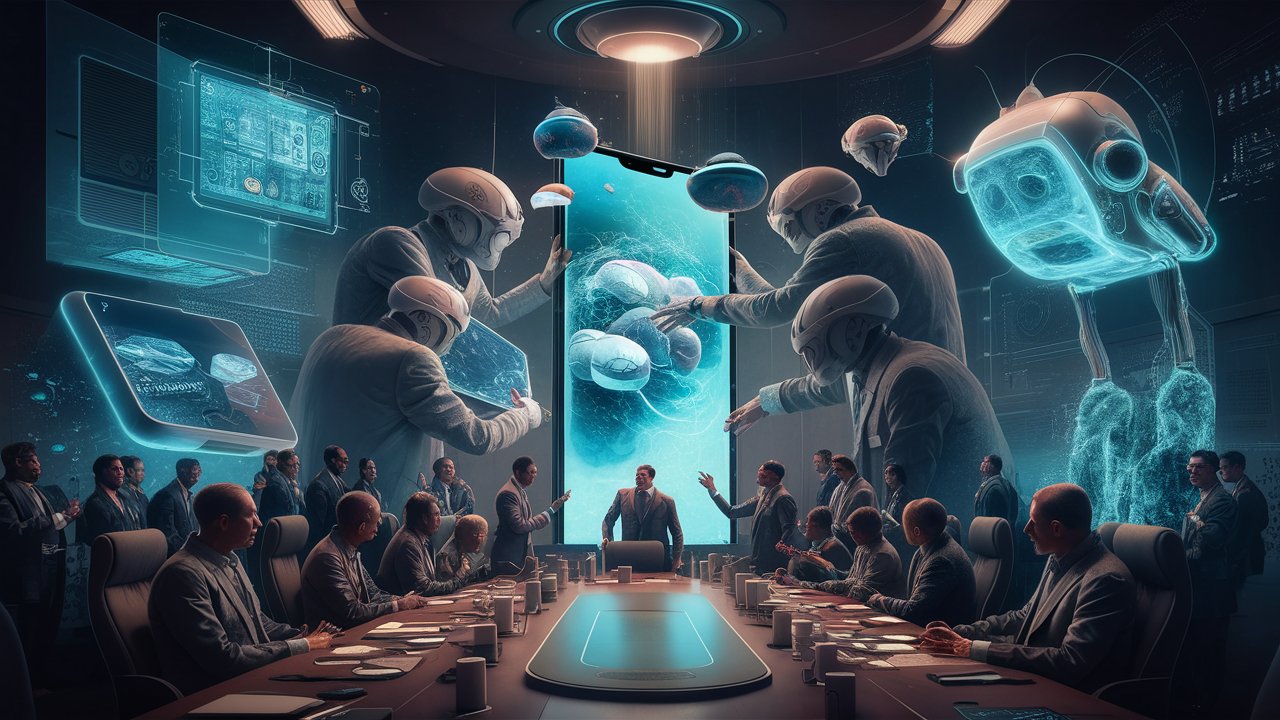
Tech giants envision future beyond smartphones technology, is approaching a new phase where tech giants are envisioning a future beyond its limitations. Companies like Apple, Google, Samsung, and Microsoft are exploring innovations that go beyond the traditional rectangular touchscreen device, introducing concepts that include wearable tech, augmented reality, artificial intelligence integration, and interconnected ecosystems. This shift reflects a broader trend in the technology industry: a move from devices as mere communication tools to immersive experiences that seamlessly integrate into daily life. Understanding how tech giants are planning for this post-smartphone era is crucial for consumers, investors, and businesses who want to anticipate the next wave of innovation and the evolving role of technology in society.
Why Tech Giants Are Moving Beyond Smartphones
The smartphone revolution dominated the past two decades, providing portability, internet connectivity, and an all-in-one interface for communication, entertainment, and productivity. However, several factors are pushing tech giants to explore alternatives. First, the smartphone market is maturing, with saturated adoption in many regions and slowing growth rates. Second, consumer expectations are evolving; users demand devices that integrate more seamlessly into daily life, anticipate needs through AI, and offer immersive experiences rather than simple communication. Third, emerging technologies such as AR, VR, AI, and wearable devices present opportunities for new products that transcend the traditional smartphone form factor. These trends collectively explain why major tech players are shifting their focus from incremental smartphone upgrades to revolutionary approaches that redefine personal technology.
Key Innovations Leading the Post-Smartphone Era
Tech giants are pursuing several key innovations to lead the post-smartphone era:
-
Augmented Reality (AR) and Virtual Reality (VR): Companies are developing AR glasses, VR headsets, and mixed reality platforms that blend physical and digital environments. These devices promise new ways to communicate, work, and experience entertainment without relying on a handheld smartphone.
-
Wearable Technology: Advanced wearables, such as smartwatches, health trackers, and AI-powered glasses, are extending the functionality of traditional devices and integrating with larger ecosystems for seamless experiences.
-
AI-Driven Devices: AI is being embedded into devices to anticipate user needs, automate tasks, and provide predictive personalization, making technology more intuitive than ever before.
-
Voice and Gesture Interfaces: With advancements in voice recognition and gesture control, tech giants aim to reduce dependence on touchscreens and keyboards, creating a more natural interaction between humans and machines.
-
Interconnected Ecosystems: Future devices are being designed as part of a larger ecosystem, ensuring seamless connectivity and interaction between homes, cars, workplaces, and wearable devices, all without relying solely on a smartphone as the hub.
These innovations indicate that the post-smartphone era will focus less on a single device and more on a cohesive, integrated technology environment.
Implications for Consumers and Industries
The shift beyond smartphones has profound implications for both consumers and industries. For consumers, this means enhanced convenience, more personalized experiences, and devices that blend more naturally into daily life. Wearables and AR devices may replace certain smartphone functions, offering hands-free communication, real-time translation, immersive entertainment, and even AI-assisted decision-making.
For industries, companies must rethink product development, marketing, and supply chains to adapt to new device categories and interconnected ecosystems. Software and app developers will need to design experiences that work across multiple devices simultaneously, while hardware manufacturers must innovate materials, battery life, and form factors suitable for the next generation of technology. Moreover, advertisers, content creators, and educators will face new opportunities and challenges in delivering services in immersive, device-agnostic environments.
The post-smartphone era is not just a technological shift but a paradigm change that will redefine how people interact with information, services, and each other.
Challenges in Transitioning Beyond Smartphones
Despite the exciting potential, moving beyond smartphones presents several challenges:
-
High Development Costs: AR, VR, AI, and next-gen devices require significant research and development investments, which may slow widespread adoption.
-
Consumer Adoption: Convincing users to transition from smartphones to new device categories requires education, seamless user experience, and compelling value propositions.
-
Interoperability: Devices must work across platforms and ecosystems, which demands high standards of compatibility and coordination among tech giants.
-
Privacy and Security: Emerging technologies involve increased data collection, raising privacy concerns and the need for robust security measures.
Addressing these challenges will be essential for tech giants to successfully establish the post-smartphone era.
Conclusion
Tech giants envision a future beyond tech giants envision future beyond smartphones, intelligent, and interconnected. By leveraging AR, VR, AI, wearables, and ecosystem-driven innovation, companies like Apple, Google, Samsung, and Microsoft are reshaping the landscape of personal technology. For consumers, this shift promises convenience, personalization, and new ways to engage with digital content. For industries, it represents an opportunity to develop novel devices, applications, and services while navigating challenges related to adoption, interoperability, and security. As the post-smartphone era unfolds, understanding these trends is critical for anyone looking to remain ahead in the rapidly evolving world of technology.
❓ Frequently Asked Questions (FAQ)
Q1: What does “future beyond smartphones” mean?
It refers to the emerging era where technology moves past traditional smartphones, focusing on wearables, AR/VR devices, AI-driven tools, and interconnected ecosystems.
Q2: Which tech giants are leading this transition?
Companies like Apple, Google, Samsung, Microsoft, and Meta are pioneering innovations that aim to reduce reliance on smartphones.
Q3: What types of devices will replace smartphones?
Next-generation devices include AR glasses, VR headsets, advanced wearables, AI-powered assistants, and ecosystem-integrated tools.
Q4: How will this shift affect consumers?
Consumers can expect more personalized, immersive, and hands-free experiences, along with seamless integration across multiple devices.
Q5: What challenges do tech companies face in this transition?
Challenges include high development costs, consumer adoption, device interoperability, and privacy and security concerns.