
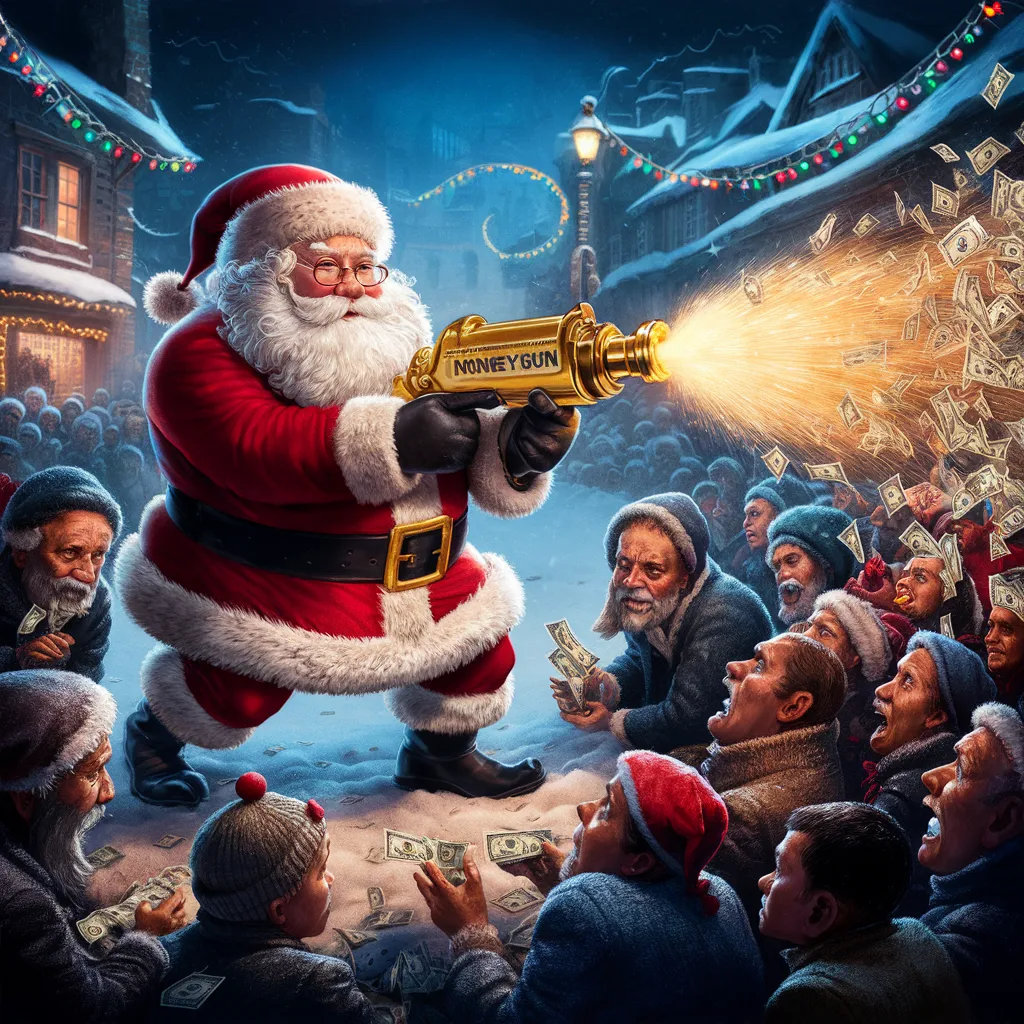
The holiday season is often portrayed as a time of joy, generosity, and togetherness. Yet beneath the glittering lights and festive cheer lies a more complex reality one shaped by consumerism, competition, and the pursuit of wealth. The phrase “Money Guns and a Merry Christmas” captures this paradox perfectly. It evokes images of materialism, power, and moral conflict during a season meant for peace and goodwill. Whether interpreted as a critique of modern society, a metaphor for greed, or a reflection of cultural disillusionment, the phrase challenges us to reconsider what the holidays truly represent. This article explores the deeper meaning behind “Money Guns and a Merry Christmas,” examining how it symbolizes the tension between wealth and morality, violence and celebration, and the human struggle to find authenticity in a world driven by excess.
The Origins and Interpretation of the Phrase
While the exact origin of “Money Guns and a Merry Christmas” is unclear, the phrase has gained traction as a symbolic expression of modern contradictions. It combines three powerful elements money, guns, and Christmas each representing a distinct aspect of human behavior and societal values. Money symbolizes greed, ambition, and the relentless pursuit of success. Guns represent power, control, and sometimes the darker side of human nature. Christmas, traditionally associated with love, compassion, and generosity, stands in stark contrast to the other two. When combined, these words form a provocative statement about how materialism and aggression have infiltrated even the most sacred and joyful times of the year. The phrase serves as both a critique and a mirror, reflecting how far society has drifted from the true spirit of giving.
The Role of Money in Modern Christmas Culture
In today’s world, the holiday season has become synonymous with spending. From lavish gifts to extravagant decorations, the pressure to display wealth and generosity often overshadows the emotional and spiritual essence of Christmas. The “money” in “Money Guns and a Merry Christmas” symbolizes this commercialization. What was once a celebration of gratitude and connection has, for many, turned into a competition of consumption. Advertisements flood every platform, urging people to buy more, spend more, and equate love with material value. This obsession with money not only fuels economic inequality but also erodes the genuine joy of giving.
Guns as a Symbol of Power and Control
The inclusion of “guns” in “Money Guns and a Merry Christmas” introduces a darker, more unsettling dimension. Guns symbolize power, dominance, and sometimes fear elements that have no place in a season meant for peace. Yet, metaphorically, they represent the aggressive pursuit of success and the defensive walls people build to protect their wealth and status.
The Paradox of a “Merry Christmas”
The final part of the phrase “a Merry Christmas” adds a layer of irony and contrast. It evokes warmth, family, and joy, yet when paired with “money” and “guns,” it becomes a commentary on the contradictions of modern life. The phrase suggests that even in moments of celebration, society cannot escape its obsession with wealth and power. The “merry” aspect becomes superficial, masking deeper issues of inequality, moral decay, and emotional emptiness.The phrase “Money Guns and a Merry Christmas” thus becomes a mirror reflecting the duality of human nature the coexistence of generosity and greed, peace and conflict, love and ambition.
Cultural and Artistic Interpretations
Artists, writers, and filmmakers have long explored themes similar to those embodied in “Money Guns and a Merry Christmas.” From satirical holiday films to dark comedies and social commentaries, the blending of joy and corruption has become a recurring motif. The phrase could easily serve as the title of a modern story or film exploring the moral complexities of the holiday season. It resonates with audiences because it captures a universal truth: that beneath the surface of celebration lies a struggle between authenticity and appearance. In art and culture, this phrase can symbolize rebellion against conformity, a critique of capitalism, or a reflection on the loss of innocence in a world driven by profit.
The Psychological Dimension: Why the Phrase Resonates
The reason “Money Guns and a Merry Christmas” resonates so deeply is that it speaks to the human condition. It reflects the internal conflict between desire and morality, between wanting more and being content with less. The holidays often amplify these emotions, as people navigate expectations, financial pressures, and social comparisons. The phrase encapsulates the anxiety of modern life the fear of not having enough, the need to project success, and the longing for genuine happiness.
Finding Meaning Beyond the Material
Despite its cynical tone, “Money Guns and a Merry Christmas” can also serve as a call to rediscover the true essence of the holiday season. It challenges individuals to look beyond consumerism and competition, to reconnect with values of kindness, empathy, and gratitude. True wealth lies not in possessions but in relationships and shared experiences.The phrase, when viewed through this lens, becomes a reminder that even in a world obsessed with money and power, there is still room for compassion and authenticity.
Conclusion
The phrase “Money Guns and a Merry Christmas” is more than a provocative combination of words it is a reflection of modern society’s contradictions. It exposes the tension between wealth and morality, power and peace, and the commercialization of what should be a season of love and reflection.In a world where money and power often dominate, the true spirit of Christmas lies in generosity, forgiveness, and connection.